
商品
梶葉恋月図 中野其明筆
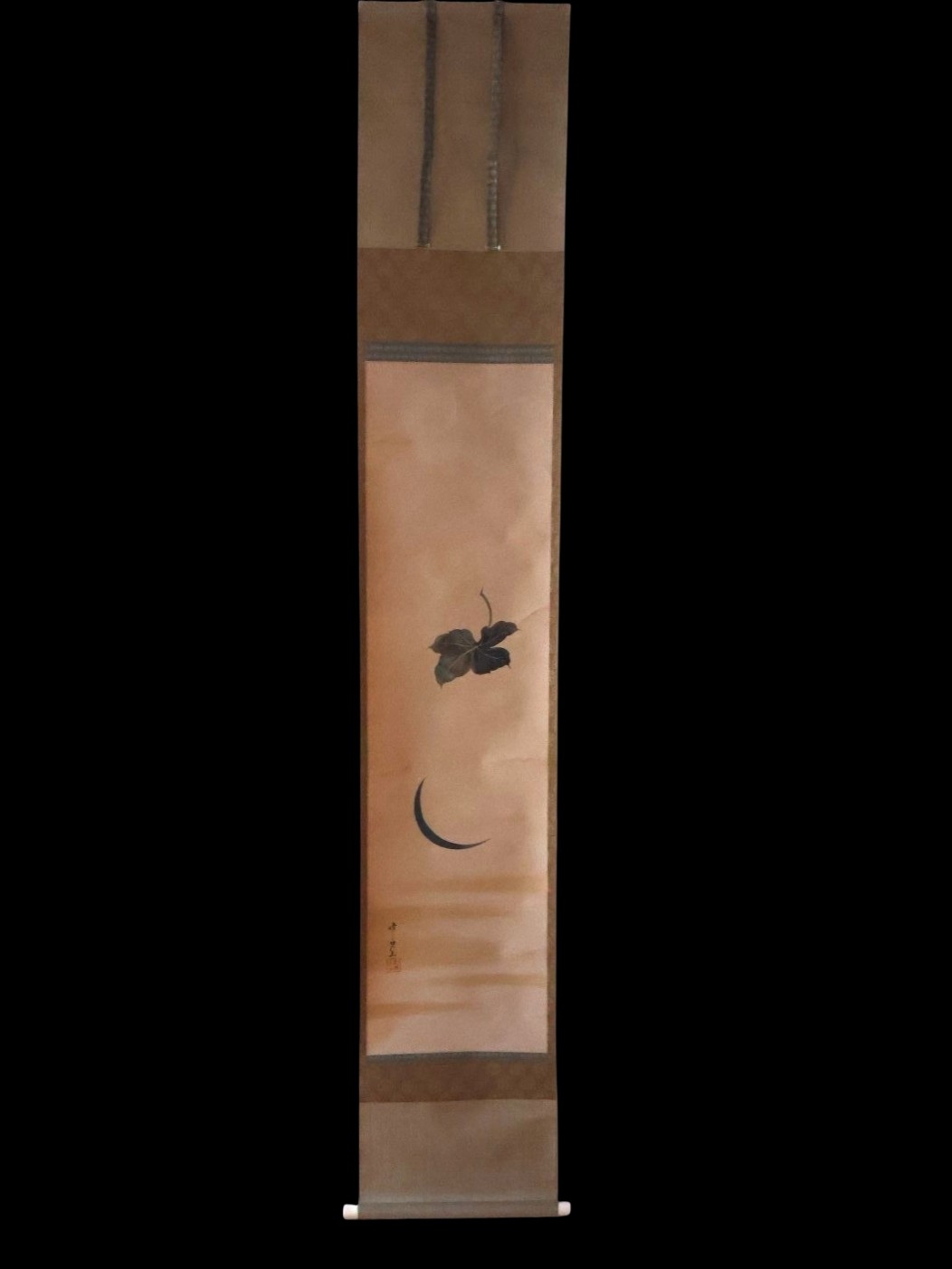

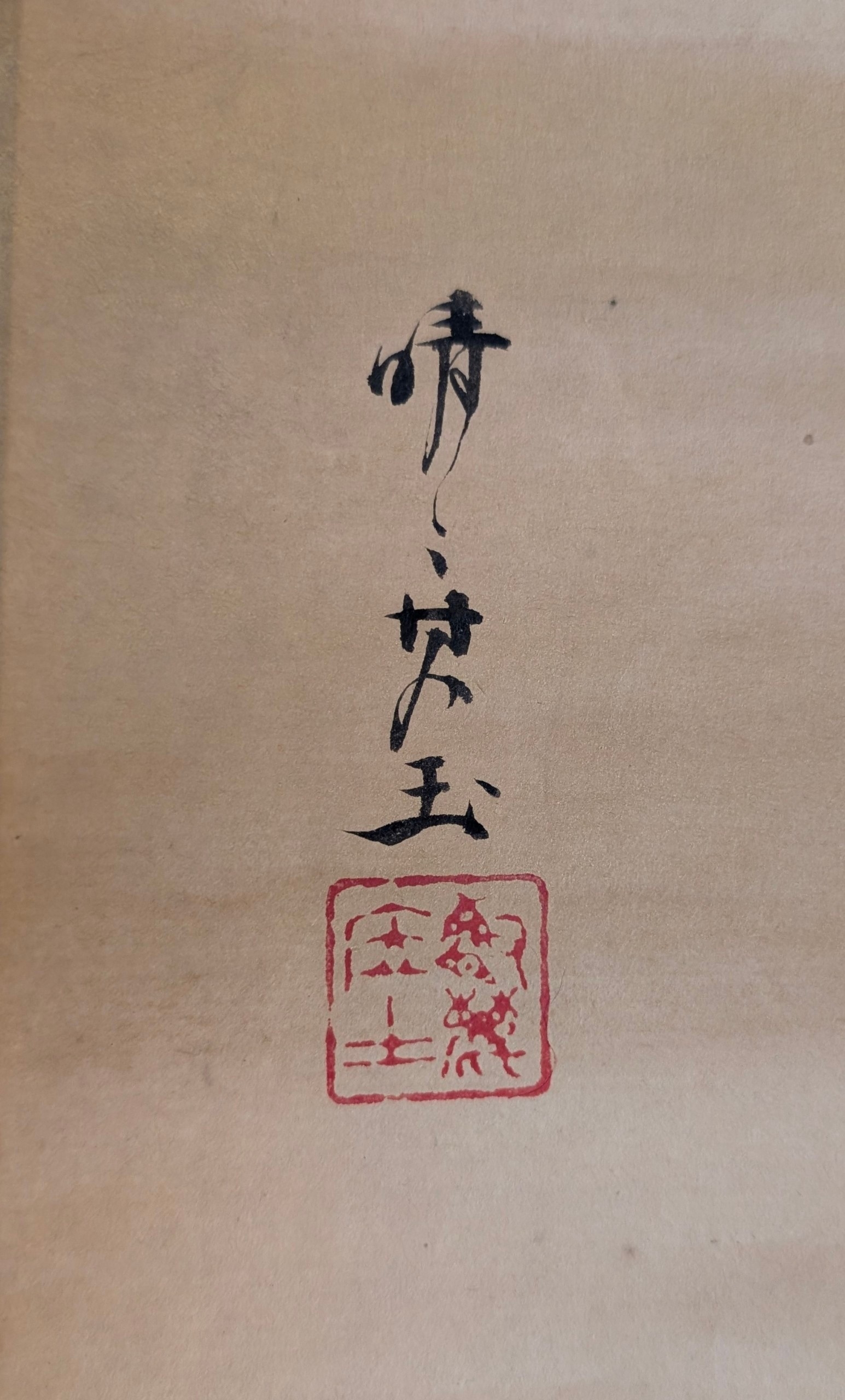
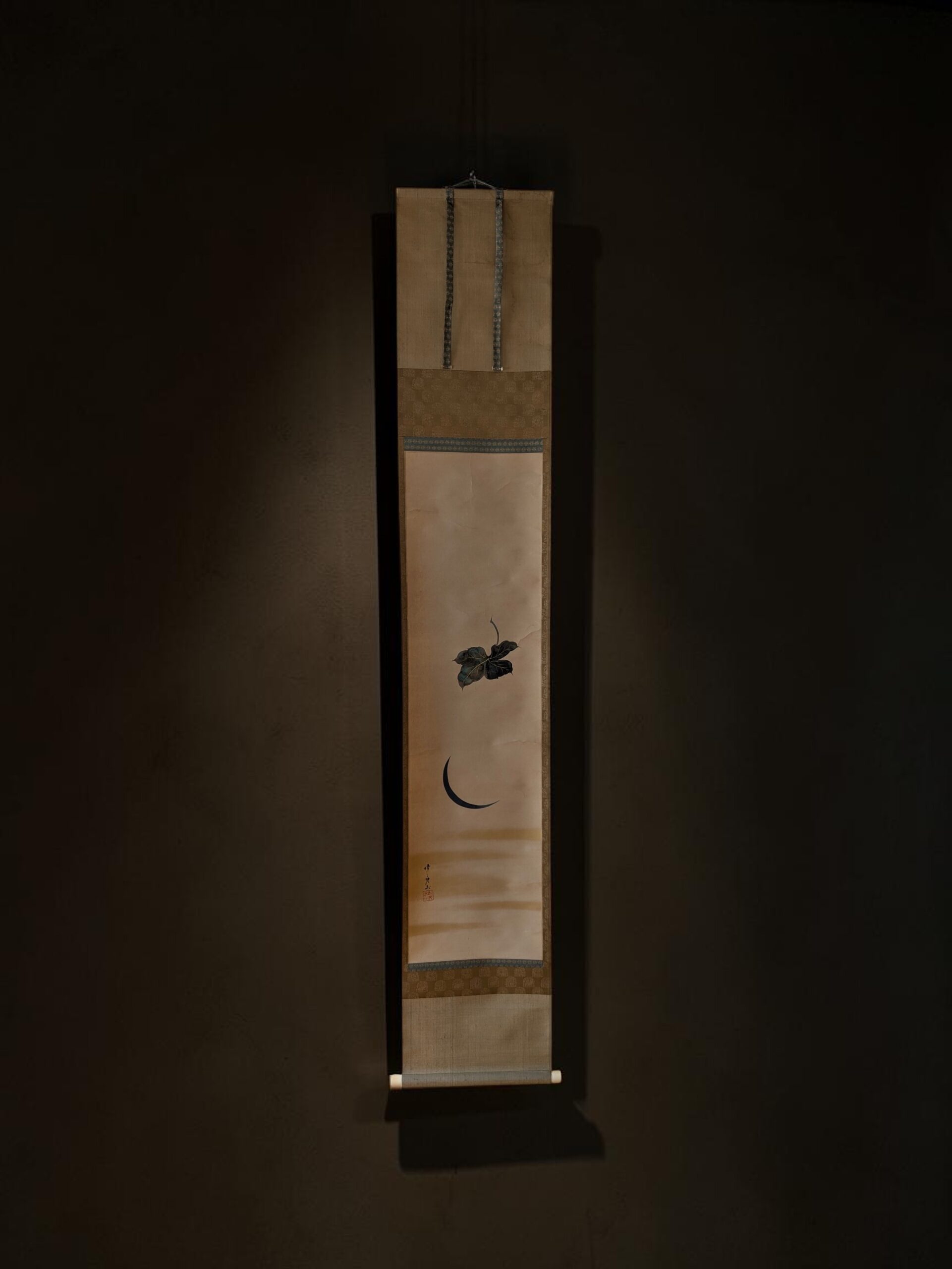

梶葉恋月図(仮題) 筆者: 中野其玉 筆
時代 明治〜大正時代
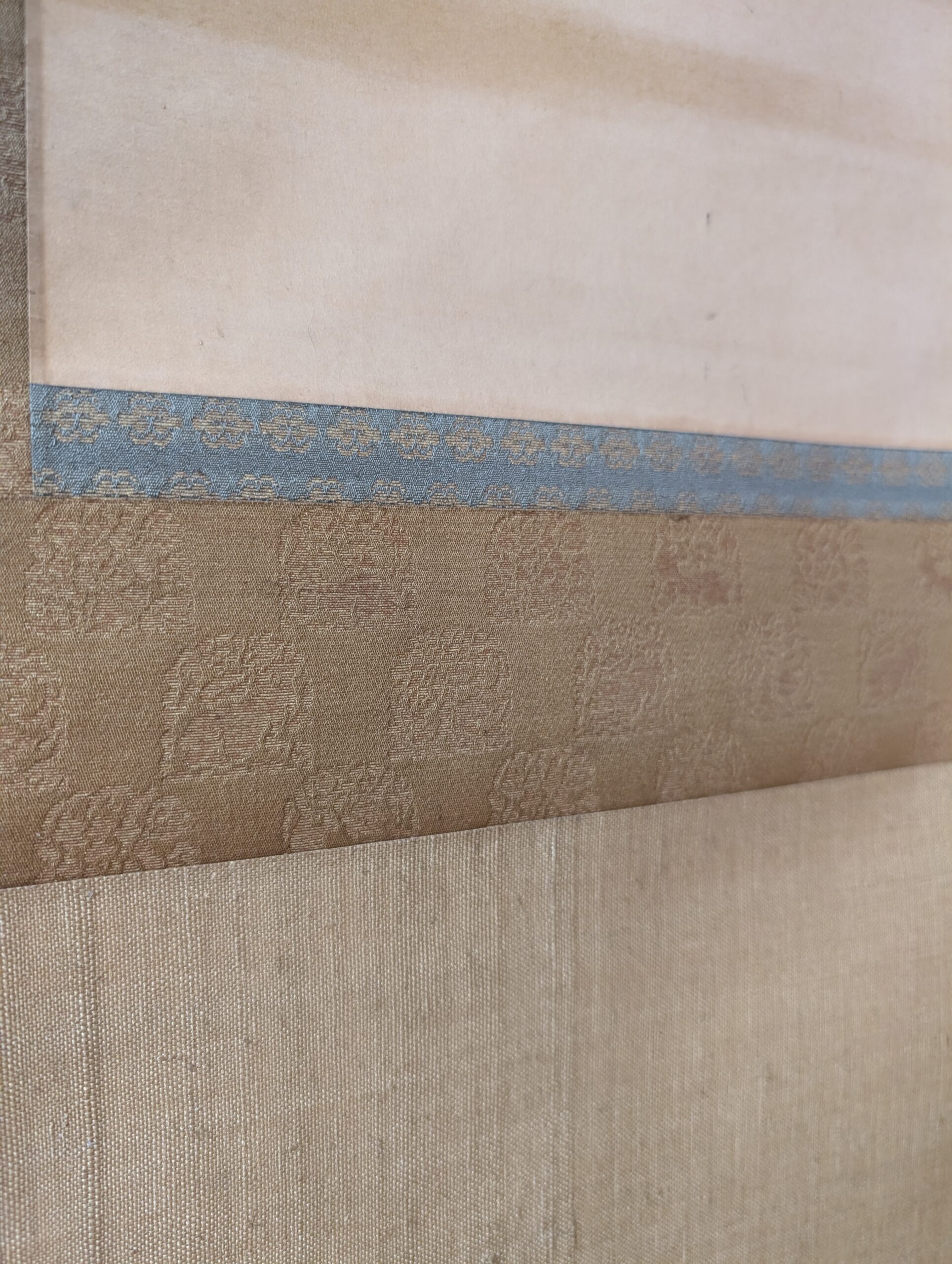
全体寸法 194.5 × 34.5 cm 本紙寸法: 118.0 × 31.5 cm
技法: 紙本着色・金泥・銀彩
静寂が支配する空間に、一幅の掛軸が秘められた物語を静かに語りかけます。
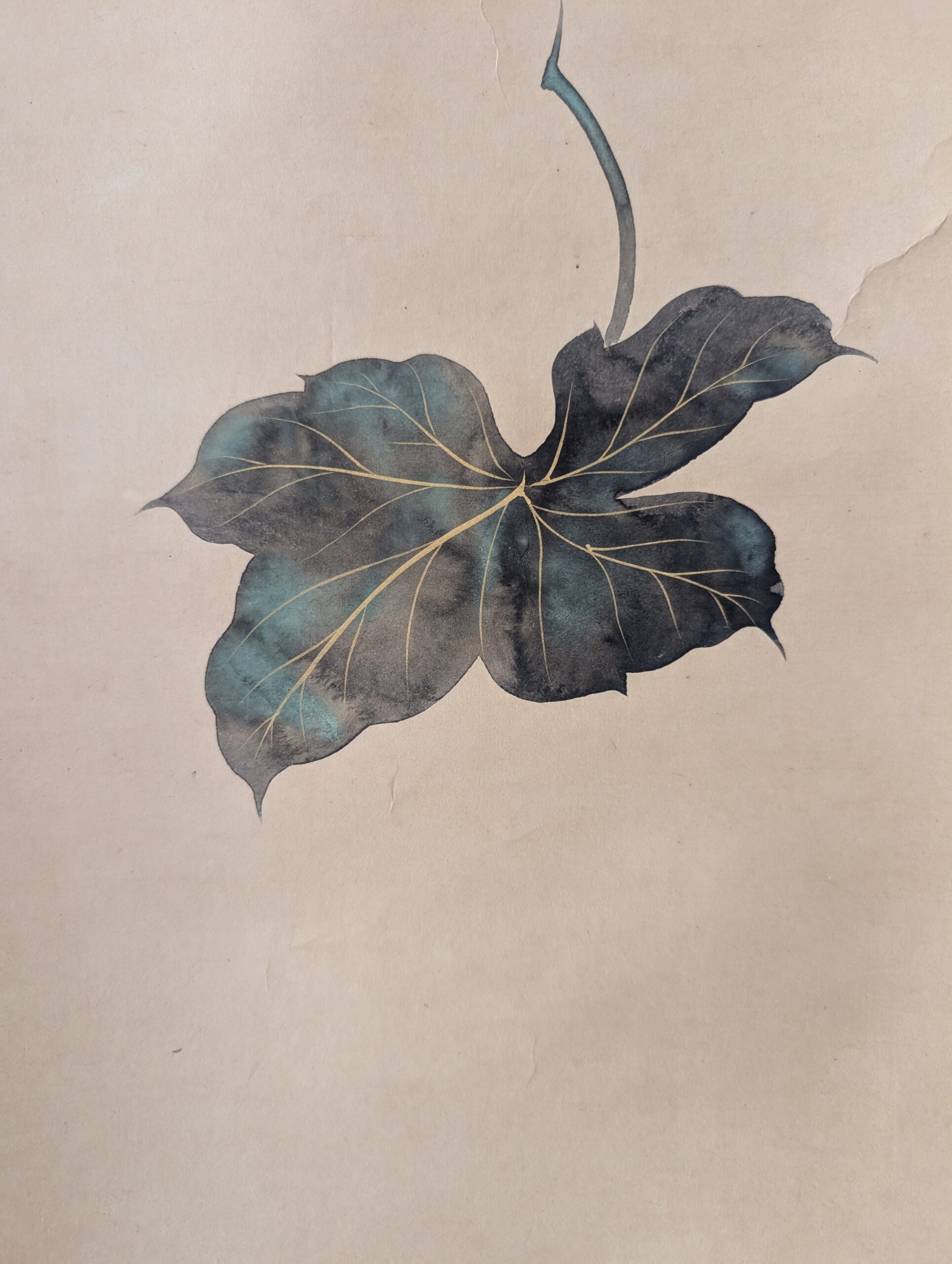
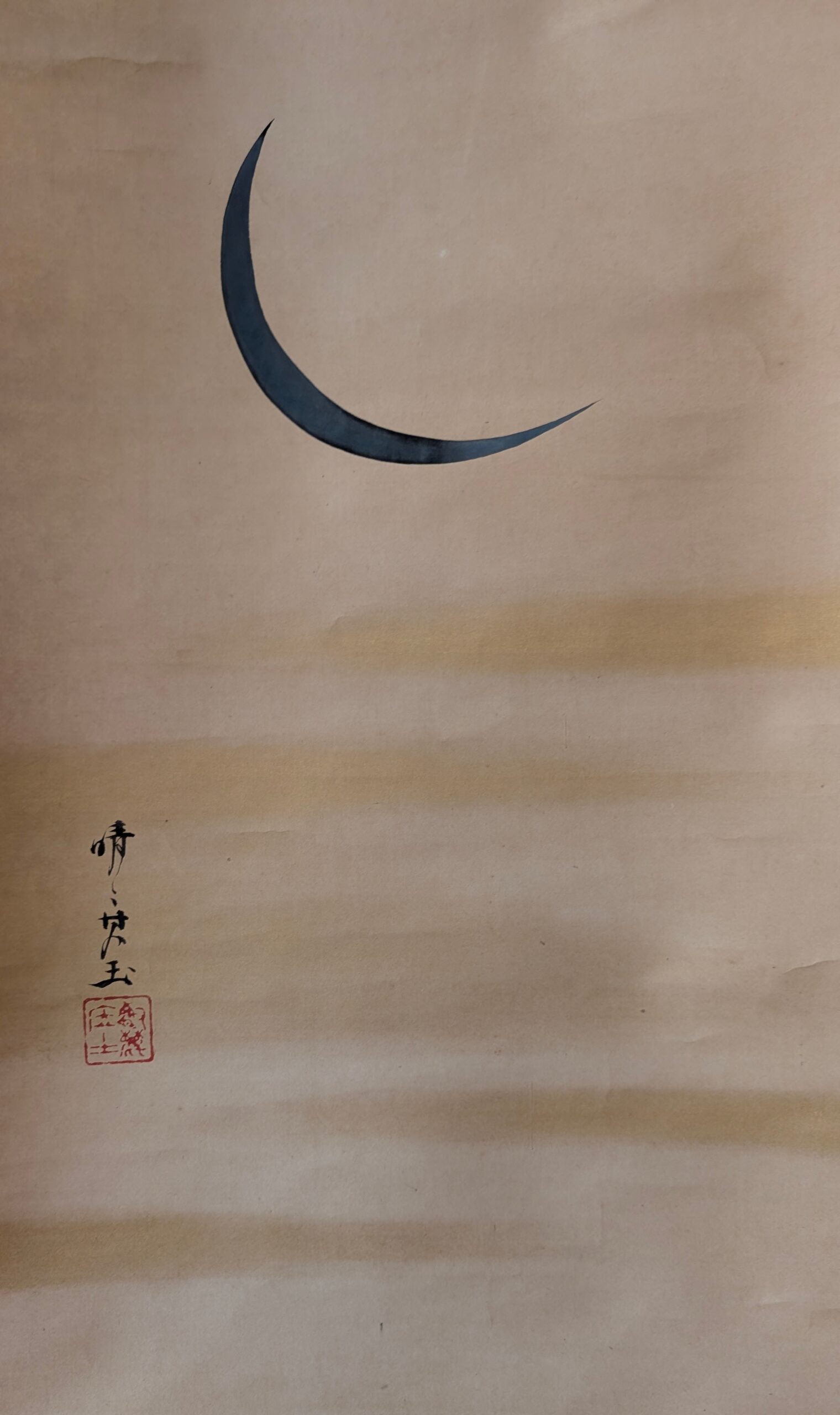
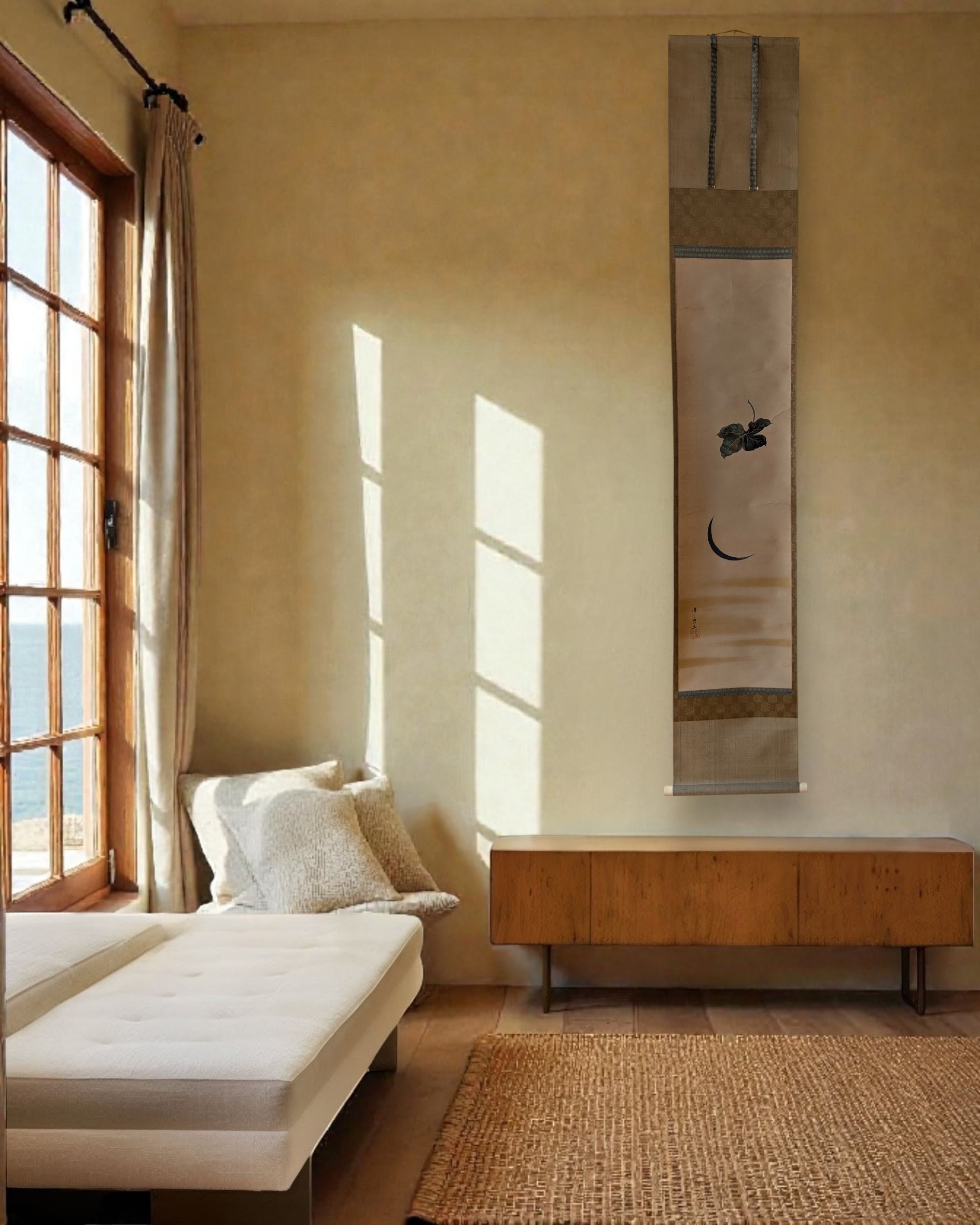
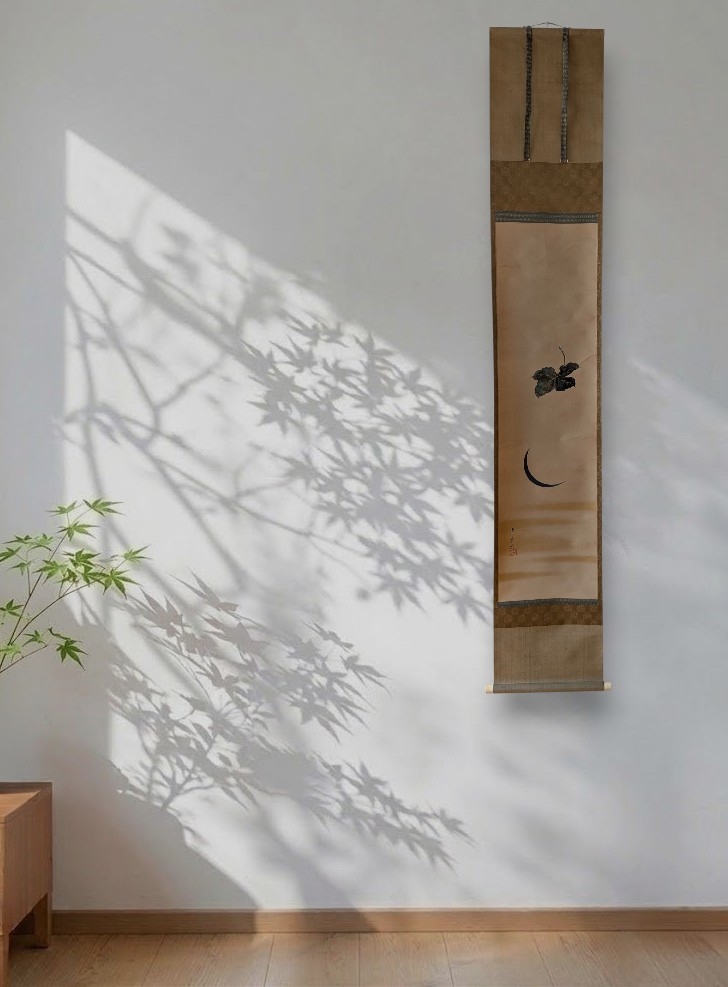
画面の上部に深い緑を宿した「梶の葉」が、下部に銀色の「三日月」が配されたこの特異な構図。なぜ月が下にあるのか——その答えは、古来より七夕の夜に行われてきた宮中行事「乞巧奠(きっこうてん)」の情景に隠されています。
かつての貴族たちは、盆や角盥(つのだらい)に水を張り、水鏡に映る月を眺めながら、手にした梶の葉の裏に和歌を認めて星に願いを託しました。すなわち、画面下部に静かに浮かぶ月は夜空のものではなく、水面に映し出された儚き「水月」なのです。天を直接仰ぐのではなく、足元の水面に落ちた月の光を愛でるという視点は、日本特有の奥ゆかしさと控えめな美徳(Understated Elegance)の象徴と言えます。
江戸琳派の巨匠・鈴木其一の系譜に連なる中野其玉は、この知的な情景を洗練された筆致で描き出しました。梶の葉に施された「たらし込み」の技法が瑞々しい生命の息吹を伝え、仄暗い空間にたなびく金泥の霞と、経年により落ち着いた輝きを放つ銀彩の月が、豊かな余白の中に深い調和を生み出しています。
長い歳月を経て受け継がれたこの作品は、かつての王朝文化の雅を今に伝える「文化の断片(Legacy)」にほかなりません。古の人が水面に探した光に想いを馳せる時間は、現代の空間に静謐をもたらす持続的な贅沢(Sustainable Luxury)のひとときとなることでしょう。
Kaji Leaf and Crescent Moon (Tentative) Nakano Kigoku brush
Period Meiji - Taisho Period (Late 19th - Early 20th Century)
Production method Color, gold, and silver on paper
Overall dimensions 194.5 × 34.5 cm Main body: 118.0 × 31.5 cm
When the stillness envelops the space, this hanging scroll begins to whisper its serene, poetic narrative.
Why is the crescent moon placed below the Kaji leaf? The answer to this intriguing composition lies in the ancient courtly ritual of Tanabata, known as Kikkoten.
On the night of the Star Festival, nobles would fill a basin with water to capture the moon's reflection. Gazing at this mirrored light, they would gently brush waka poems onto the back of Kaji (paper mulberry) leaves, offering their wishes to the stars. The moon depicted at the bottom of this artwork is not suspended in the night sky, but is rather a fragile reflection shimmering on the water's surface. This indirect appreciation of the moon—looking down into a water mirror rather than up at the heavens—perfectly embodies the unique grace and Understated Elegance inherent in Japanese aesthetics.
Nakano Kigoku, an artist within the esteemed lineage of the Edo Rinpa school master Suzuki Kiitsu, beautifully captures this intellectual scene. The signature tarashikomi technique brings the Kaji leaf to life with organic, bleeding colors, while the golden mist and the silver moon—matured elegantly over time—create a profound harmony within the generous use of empty space.
Preserved through the passage of time, this artwork is a true Legacy, a fragment of culture that quietly transmits the sophistication of the past. To immerse oneself in the silent glow that ancient nobles once sought in the water is to embrace a moment of Sustainable Luxury, bringing quietude to a modern sanctuary.
