
商品
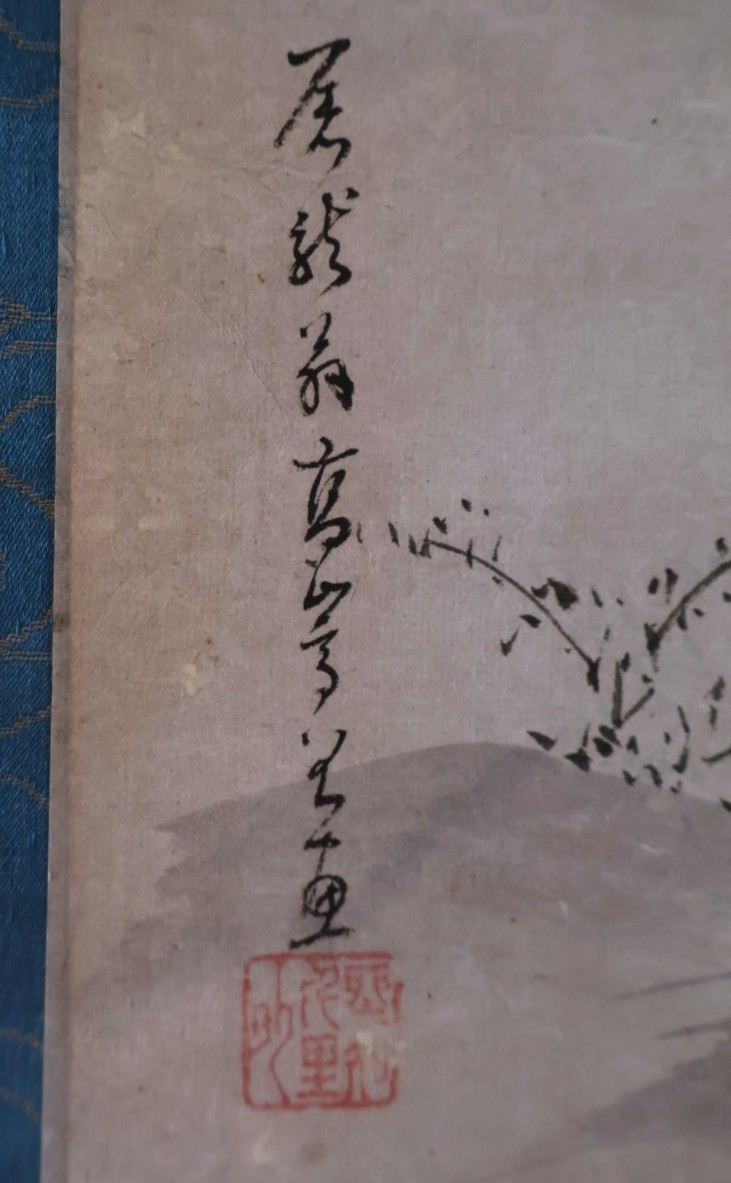
富士の嶺図 高嵩谷筆




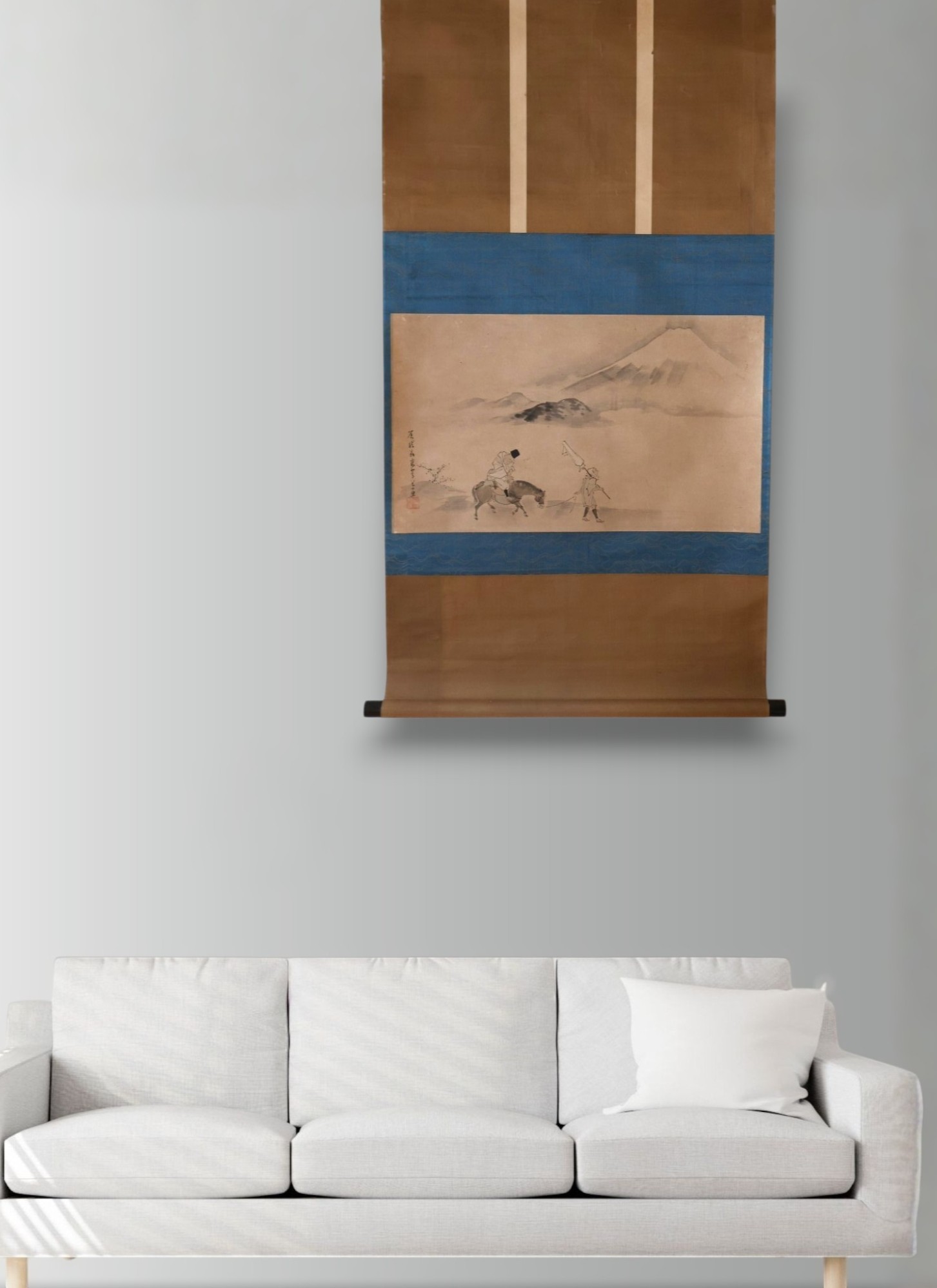
富士の嶺図(伊勢物語東下り)高嵩谷筆
江戸時代
全体約 cm 本紙:約 × cm
技法 紙本墨画淡彩
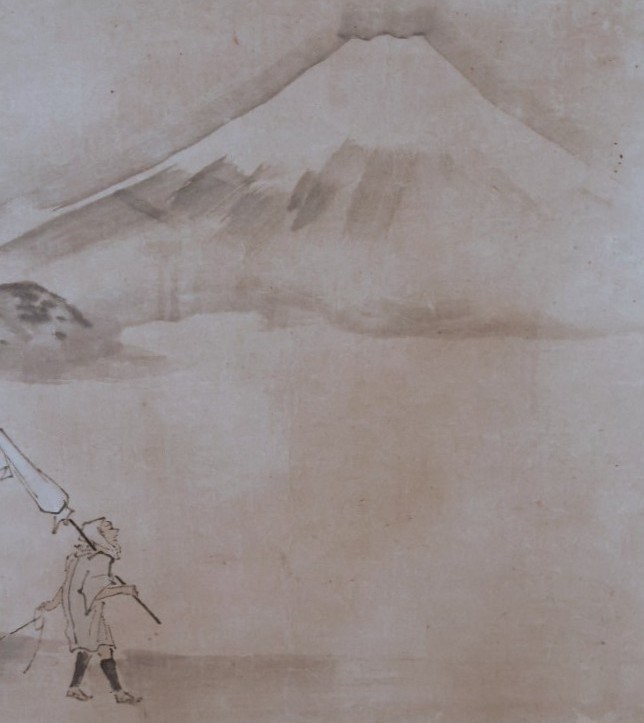
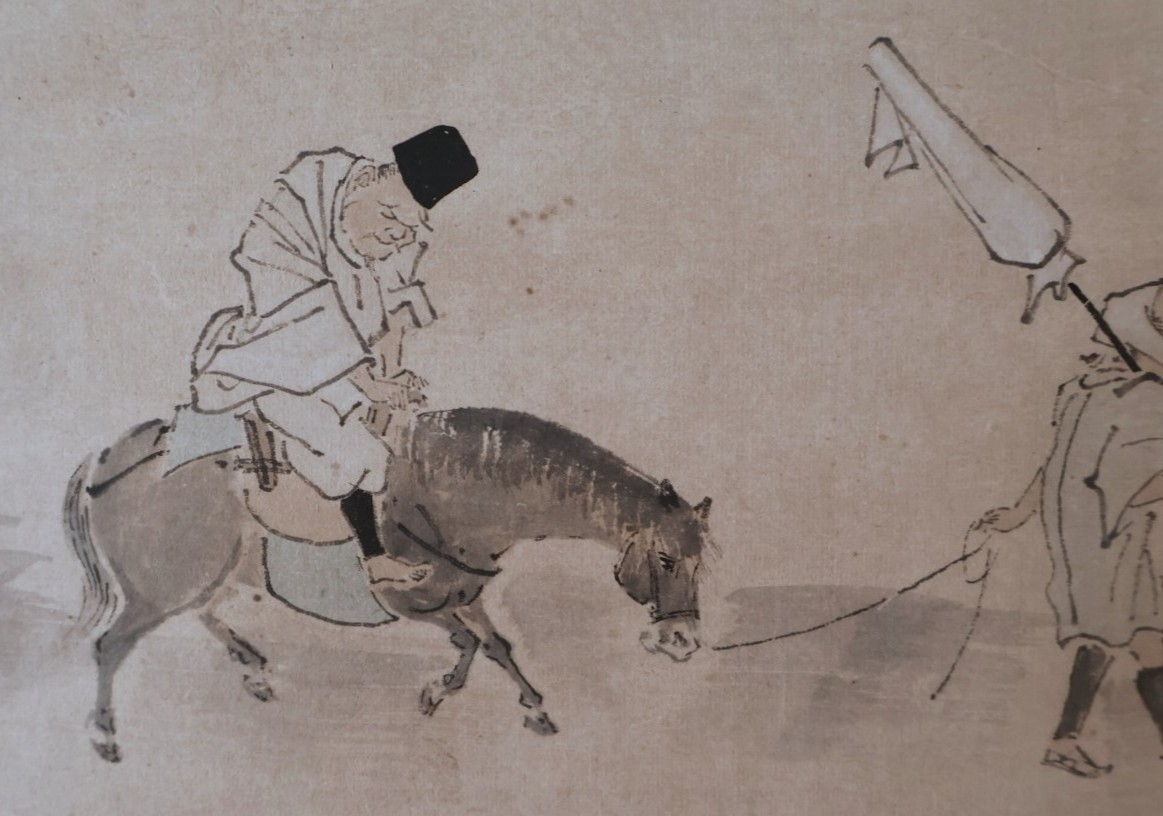
伊勢物語第九段「東下り」の著名な一節を、江戸後期の絵師・高嵩谷が柔らかな筆致で描き出した格調高い一幅です。
五月、駿河の国にたどり着いた主人公(在原業平)は、季節外れの白雪を戴く富士の山を見上げ、都への哀愁を重ねて歌を詠みます。
「時しらぬ山はふじのね いつとてかかのこまだらに ゆきのふるらん」
時をわきまえず降り積もる雪の斑模様(まだらもよう)に、彼は何を想ったのでしょうか。それは、都に置いて別れざるを得なかった大切な人への、密やかな「残心」であったのかもしれません。
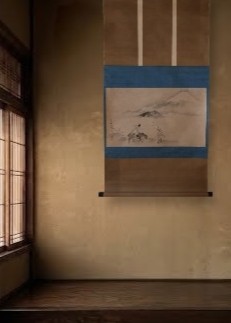
本作は、画面全体を優しく包み込む淡い墨の濃淡と、洗練された余白の美が特徴です。高嵩谷らしい軽妙かつ確かな描線は、劇的な感情をあえて表に出さず、日本の伝統的な「控えめな美徳(Understated Elegance)」を感じさせます。時を経た紙本が醸し出す味わいは、まさに現代における持続的な贅沢(Sustainable Luxury)そのもの。千年以上の時を超えて語り継がれる古典文学の情景が、現代の空間にも静かな気品と知的な美意識をもたらしてくれます。
Mt. Fuji (From The Tales of Ise: Azumakudari) by Kou Sukoku
PeriodEdo period
Overall: approx. × cm Image: approx. × cm
Dimensions Ink and light color on paper
This elegant hanging scroll, brushed by the Edo-period master Kou Sukoku, captures a celebrated scene from Chapter 9 of The Tales of Ise ("The Journey to the East").
In the fifth month of the lunar calendar, Ariwara no Narihira reaches Suruga Province and gazes up at Mt. Fuji, its peak unexpectedly capped with snow out of season. Deeply moved, he composes a waka poem expressing his longing for the capital:
"Fuji is a mountain that knows no seasons. What time of year does it think it is, that its slopes should be dappled with falling snow?"
What thoughts occupied his mind as he looked upon that timeless, snow-mottled peak? Perhaps it was a quiet, lingering attachment (zanshin) to the one he was forced to leave behind in Kyoto.
Sukoku's masterfully nuanced ink washes and sophisticated use of negative space evoke a sense of quietude and "Understated Elegance". Rather than overwhelming the viewer with dramatic emotion, the delicate brushwork invites a calm, intellectual appreciation of the narrative's underlying melancholy. The natural patina of the aged paper reflects a sense of sustainable luxury, presenting this piece not merely as an artwork, but as a cultural legacy to be treasured in a modern space.
